
Growing Knock Out Roses in Southeast Texas
A practical guide to growing Knock Out Roses, based on Texas A&M AgriLife Extension's Earth-Kind® guidance: size and spacing, sun, soil preparation, mulch, watering and fertilizing.
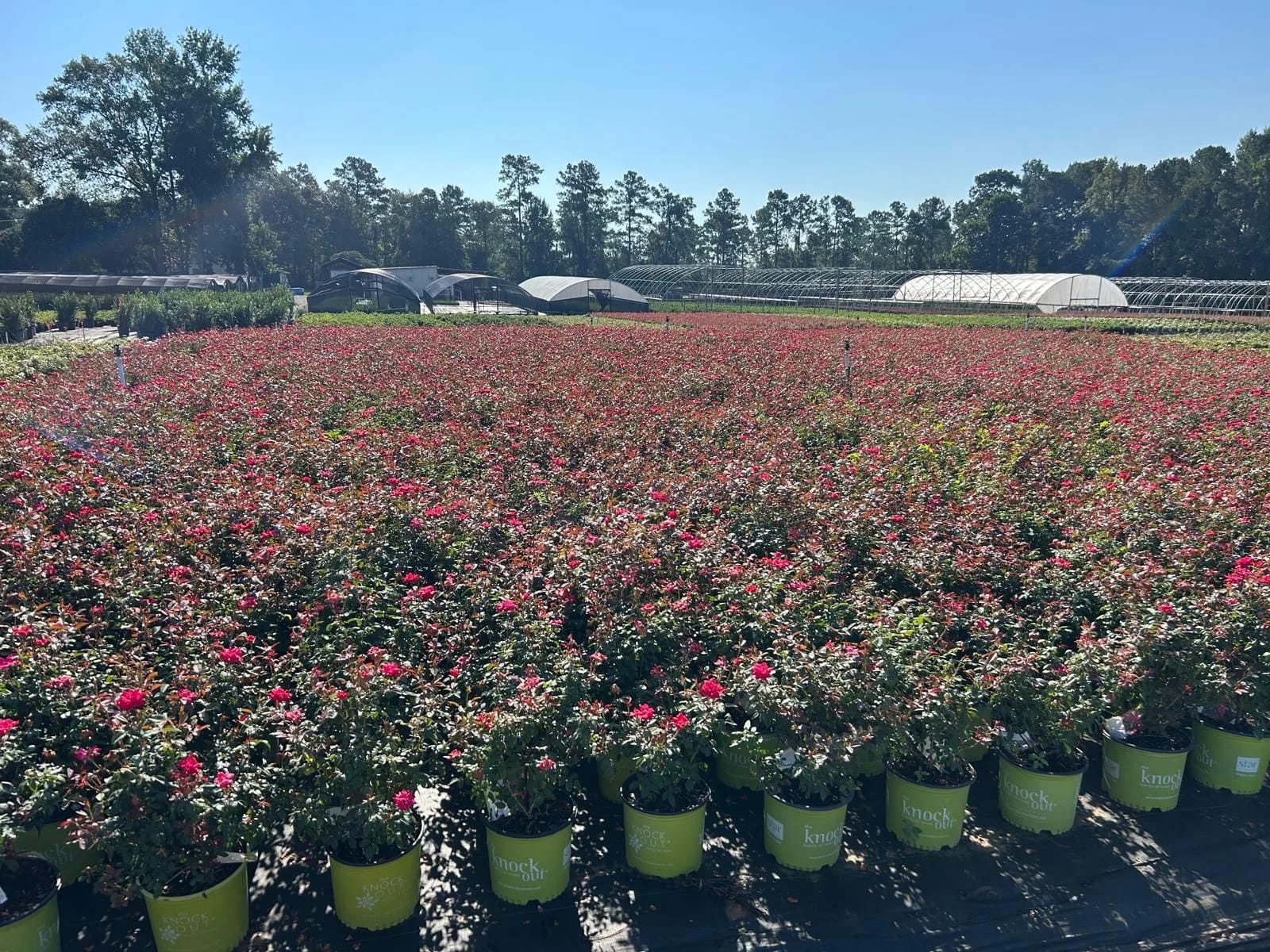
Rosa 'Knock Out' is a shrub rose that Texas A&M AgriLife Extension includes among its Earth-Kind® roses. This guide brings together Extension's cultivar information and its basic care recommendations for gardeners in Southeast Texas.
Why start with a Knock Out Rose
According to Extension, Knock Out set a new standard in disease resistance, with little to no maintenance required. It produces an almost non-stop abundance of cherry-red, single blossoms, with successive flushes of bloom in spring, summer, and fall. Extension describes it as black spot resistant, drought tolerant, and self-cleaning, and calls it probably the very best choice for gardeners who are just beginning with roses.
Extension's cultivar page also speaks to gardeners who have hesitated to use roses because of the traditional maintenance that modern hybrid tea roses need to stay healthy and disease free. Knock Out was introduced in the United States in 2000 and was a 2000 All-America Rose Selections winner.
Size, spacing, and flowers
Extension classifies Knock Out as a medium shrub and lists it at 6 feet tall and 6 feet wide. The recommended spacing is 8 feet apart on centers, so plan the bed around a plant of that size. The blossoms are medium-sized, single, and cherry red. This rose is not fragrant.
Choosing the planting site
- Sun. Plant where roses receive full, direct sunlight for at least eight hours each day. Full sun is best for Knock Out, which can tolerate some light dappled shade in the afternoon.
- Air movement. Choose a location with good air movement over the leaves, and do not plant too close together or in cramped, enclosed areas.
- Open space. When a plant is fully grown, at least one foot of open space should remain all around it. This helps reduce the potential for foliar diseases.
Preparing the soil
Roses respond well to soil with an adequate balance of aeration, drainage, and water-holding characteristics. Texas A&M's bed preparation depends on your soil:
- Sandy and loam soils: incorporate 3 to 6 inches of fully decomposed, plant-derived compost.
- Clay soils: consider a one-time incorporation of 3 inches of expanded shale to improve aeration and drainage and make the soil much easier to work, then incorporate 3 inches of fully decomposed, plant-derived compost. Mix the existing soil, expanded shale, and compost thoroughly into a uniform planting medium. If shale is not available or costs too much, compost can be used instead.
- Clay soils, drainage: raised beds, crowned (higher) in the center, are also beneficial because they promote drainage.
Mulch
Regardless of soil type, roses benefit from a year-round, 3-inch layer of organic mulch, such as tree limbs with leaves that have been run through a chipper. Extension says mulch conserves water, reduces weeds, reduces soil-borne plant diseases, moderates soil temperatures, and provides nutrients as it decomposes. Replenish the mulch as needed to maintain the 3-inch layer.
Watering
Keep Knock Out moist until it is established, which usually takes about one month. After that, water thoroughly whenever the soil is dry in the root zone to a depth of one inch. Watering established plants too frequently can promote root disease, especially in poorly drained soils.
Roses should not be sprinkler irrigated, especially during the evening or at night. Drip irrigation is a much better method for plant health and water conservation. In areas with salty water, drip irrigation is needed to prevent burning of the foliage from salty spray; Extension notes that Knock Out appears to tolerate highly saline irrigation water when it is drip irrigated. Extension rates its drought tolerance as good.
Pruning and care
Follow recommended plant spacing and pruning practices, and remove dead, diseased, or broken branches to help promote plant health. Knock Out is also described as self-cleaning.
Fertilizing the Earth-Kind way
Earth-Kind soil management relies on compost and mulch alone. Texas A&M says that in most loam or clay soils, if you follow this compost and mulch approach, commercial synthetic or organic fertilizers are not required. The compost goes into the bed when it is prepared, and the year-round mulch provides nutrients as it decomposes.
Hardiness and landscape uses
Extension lists Knock Out as hardy in zones 5b to 9. It can be used in many landscape designs: massed along walkways, in front of dark evergreen hedges, as an accent in front of the house, or around a pool.
Next steps
You can see Knock Out Rose in our plant inventory, or contact Woodlands Nursery with questions about planning your bed.
Frequently asked questions
- Do Knock Out Roses need full sun?
- Full sun is best. Texas A&M AgriLife Extension recommends a spot that gets full, direct sunlight for at least eight hours a day. Knock Out can tolerate some light dappled shade in the afternoon. Choose a location with good air movement.
- How should I water Knock Out Roses?
- Keep the plant moist until it is established, which usually takes about one month. After that, water thoroughly whenever the soil is dry to a depth of one inch in the root zone. Roses should not be sprinkler irrigated, especially in the evening or at night; drip irrigation is much better for plant health.
- Do Knock Out Roses need fertilizer?
- Not when you follow the Earth-Kind compost and mulch approach. Texas A&M says that in most loam or clay soils, working in compost and keeping a 3-inch layer of organic mulch means commercial synthetic or organic fertilizers are not required.
- How big do Knock Out Roses get, and how far apart should I plant them?
- Extension lists Knock Out as a medium shrub, about 6 feet tall and 6 feet wide. Space plants 8 feet apart on centers, and leave at least one foot of open space around each fully grown plant so air can move freely.
- How cold hardy are Knock Out Roses?
- Texas A&M AgriLife Extension lists Knock Out as hardy in zones 5b to 9.
- Are Knock Out Roses disease resistant?
- Extension says Knock Out set a new standard in disease resistance with little to no maintenance required, and it describes the rose as black spot resistant. Good air movement and the recommended spacing also help reduce foliar diseases.
Plants in this article
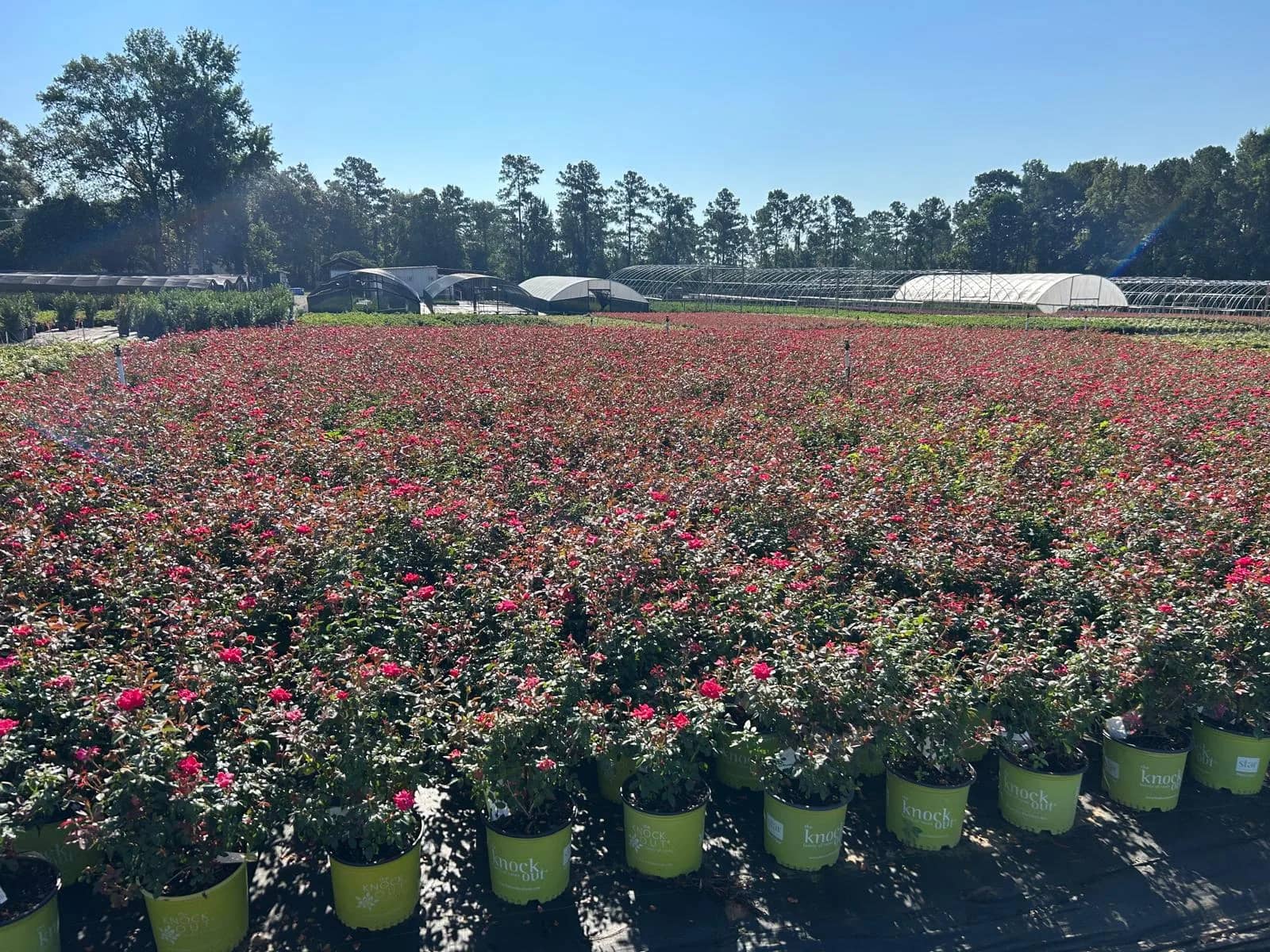
Sizes and availability are live from our inventory. Call to reserve.
 Shrubs
Sources & further reading
Related articles
 Plant Care & Growing GuidesPlant Care & Growing Guides
4 min read
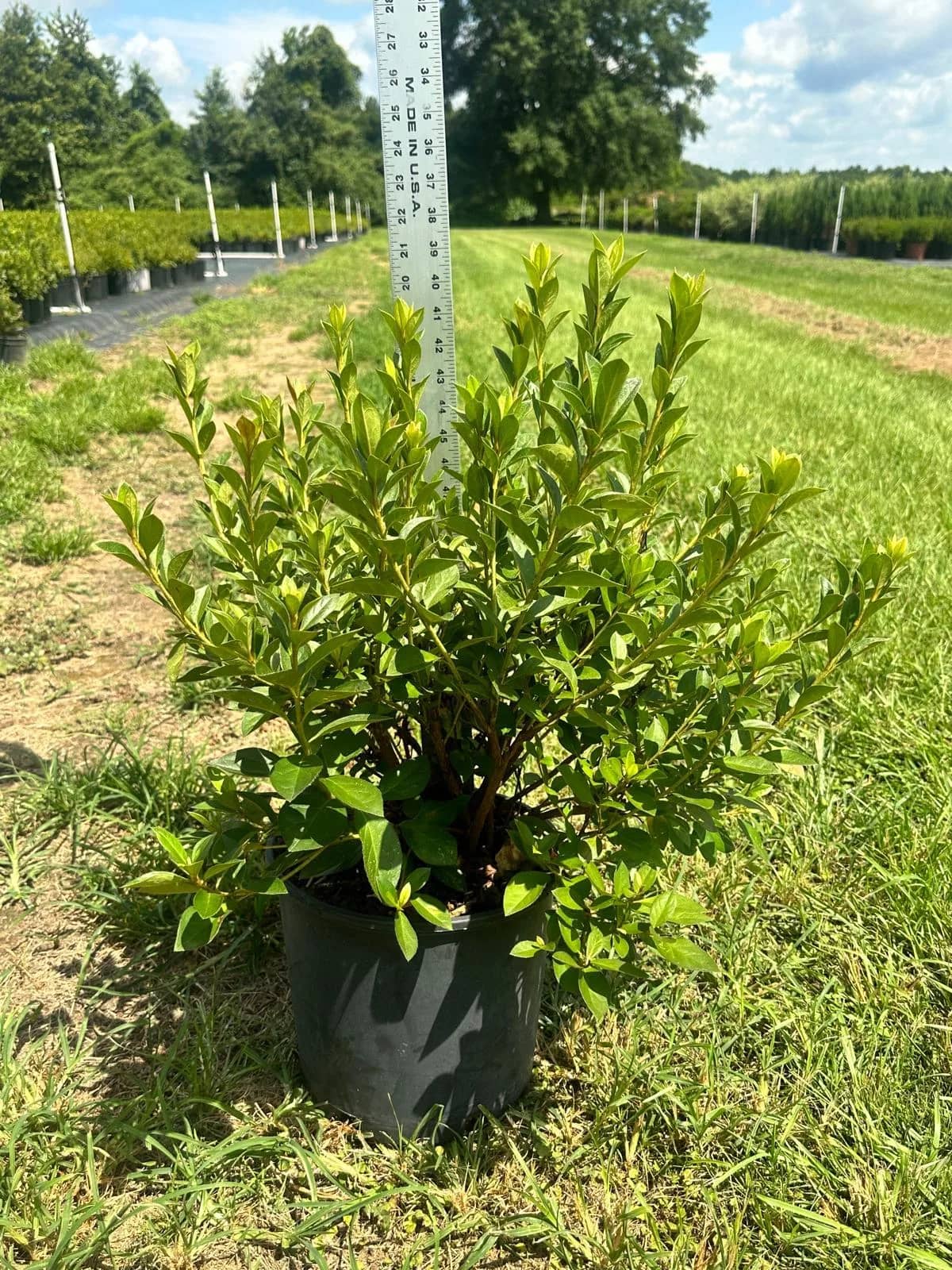
Growing Azaleas in Southeast Texas: Fall Planting and Care
Azaleas thrive in Southeast Texas gardens when planted in partial shade with acidic, well-drained soil. Fall is an ideal time to plant these evergreen shrubs for stunning spring blooms.
Read article →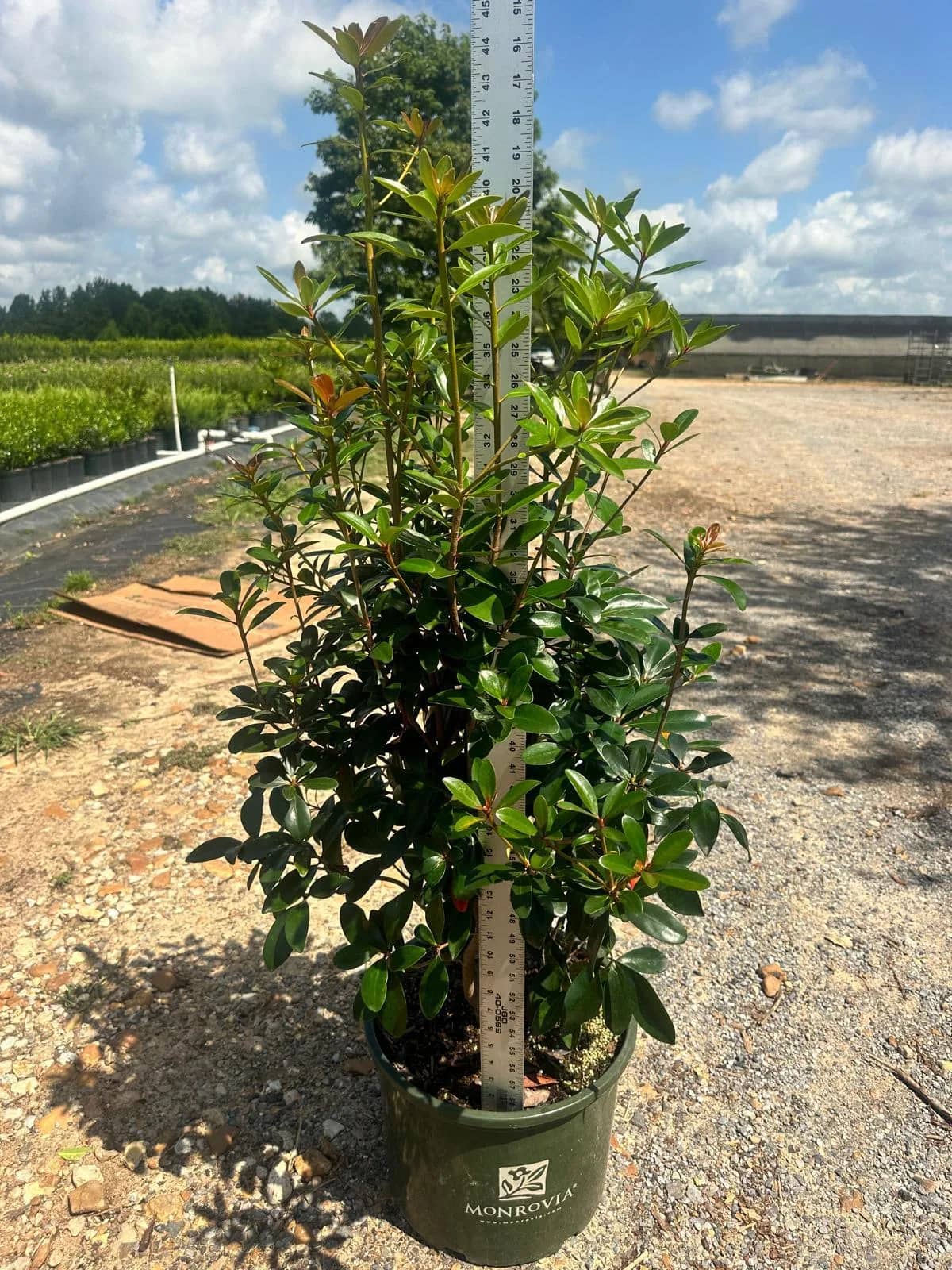 Plant Care & Growing GuidesPlant Care & Growing Guides
7 min read
How to Grow and Care for Cleyera in Southeast Texas
Cleyera is one of the easiest evergreen shrubs for shaded foundation beds and screens in Montgomery and Harris County. Here is how to plant it, water it through its first summer and keep it glossy for years.
Read article →